The Boat Rides
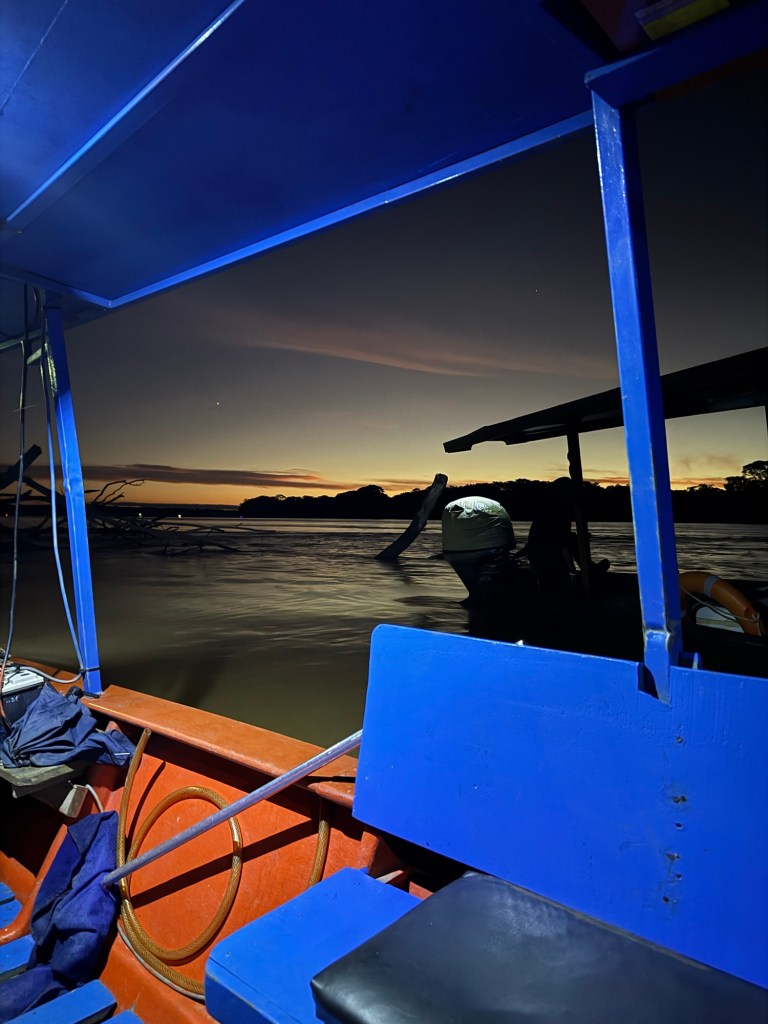
I am going to start with the thing that surprised me the most, because I did not see it coming at all. Before this trip, the boat rides were what I was most nervous about because all I thought about was being really close to the water in the middle of the Amazon. I had already accepted that I was going to be white-knuckling the rail or someone’s hand the whole time.
However,that is not what happened. Once the boat got moving and the wind hit my face, I completely relaxed. In that humidity, the breeze felt incredible. It was honestly one of the most freeing feelings of the whole trip. I did not want the ride to end. So if you are heading to Puerto Maldonado and dreading the boats like I was, just trust the process.
What I Saw Out There
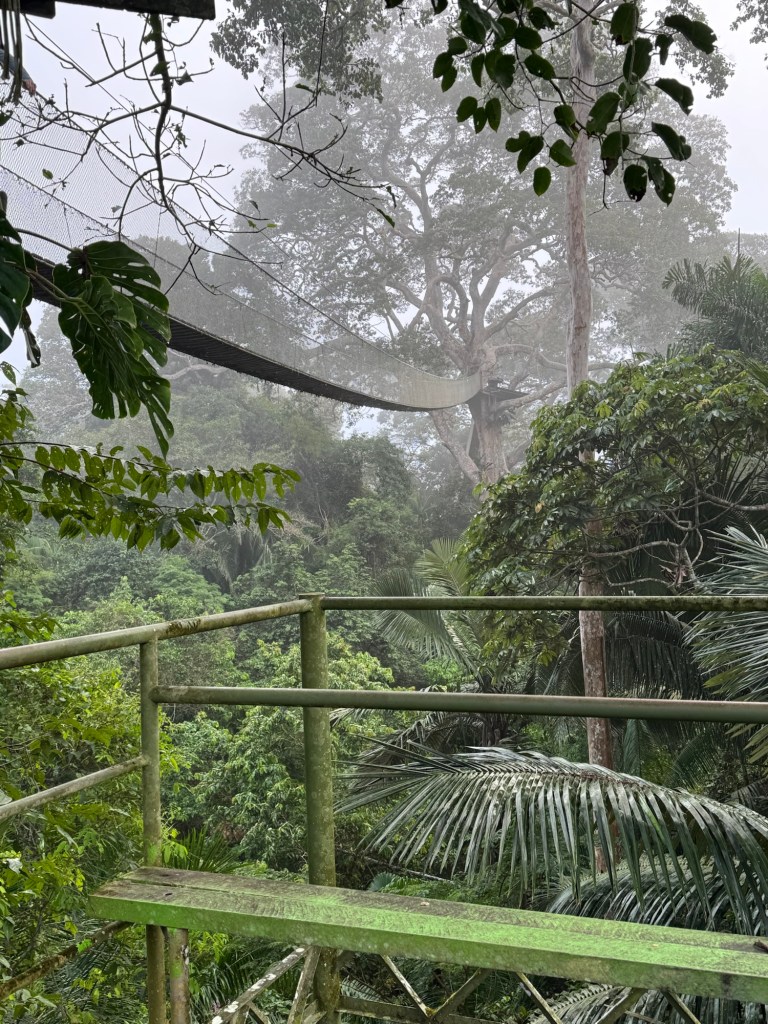
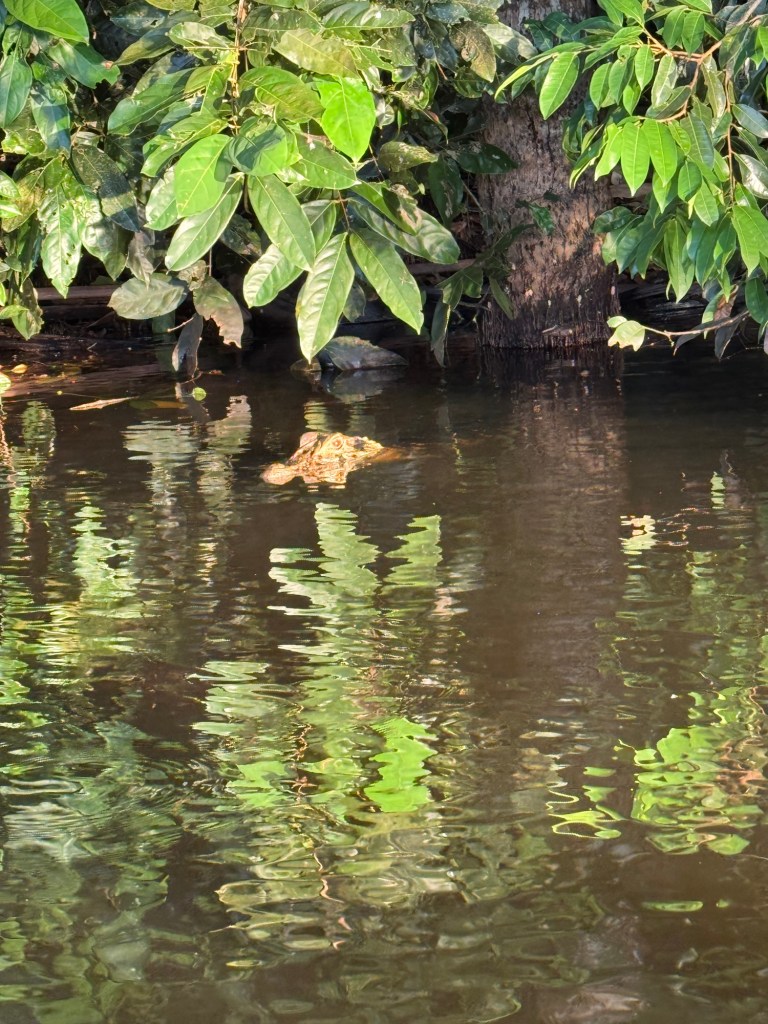
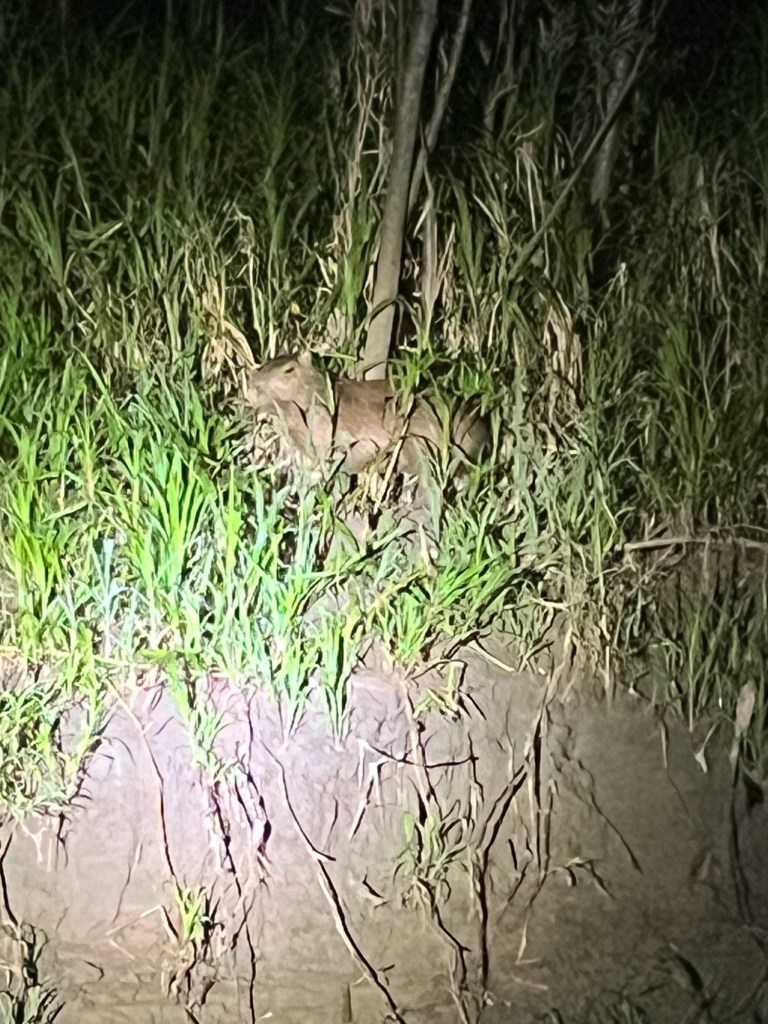
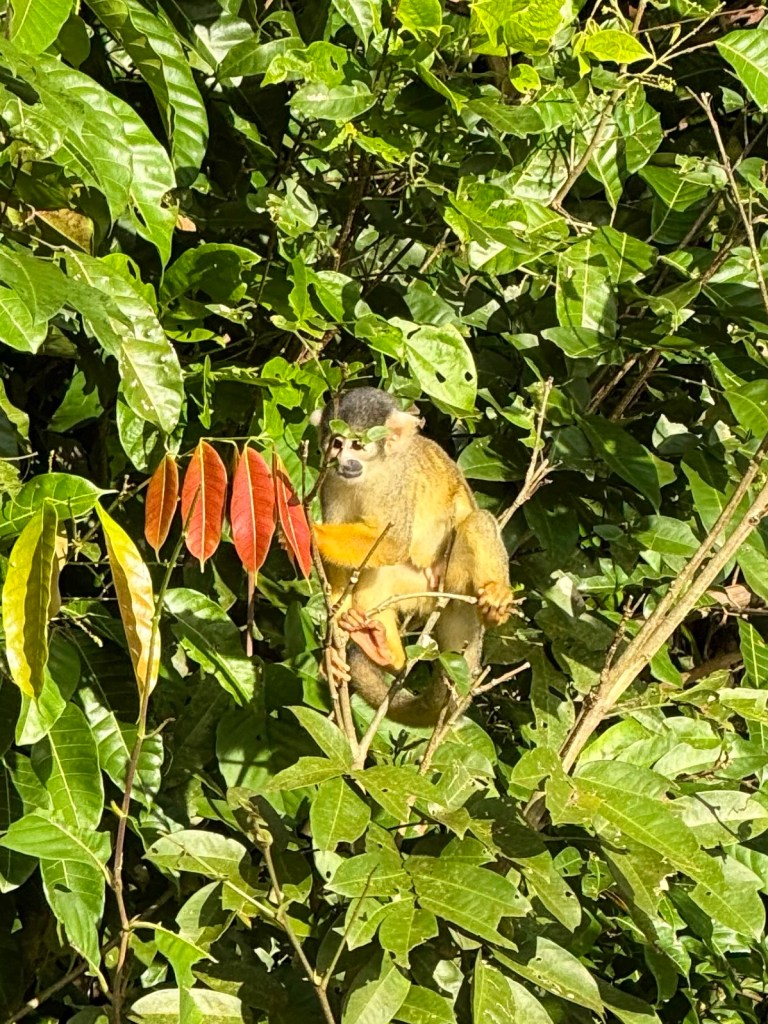
The biodiversity in the Amazon is genuinely hard to put into words. On the hike to Lake Sandoval, we watched roughly a hundred monkeys moving through the trees at once. Not a few monkeys. A hundred. We spotted all kinds of birds and came across more caimans, which are like smaller alligators, resting along the banks. That hike was one of my favorite parts of the trip because you could actually see different ecosystems interacting with each other in real time. The canopy walk was a whole different experience. I am scared of heights, so I was not thrilled about it, but the view from up there was stunning. Seeing the Amazon from that perspective gave me a completely different sense of how layered and alive the forest actually is.
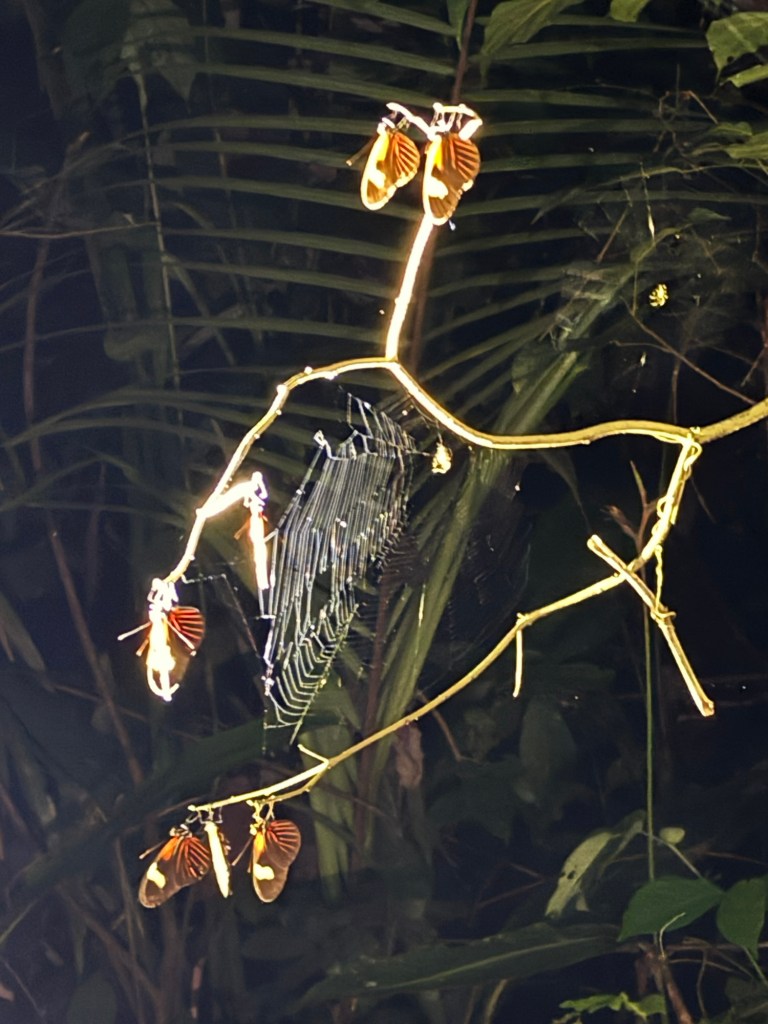
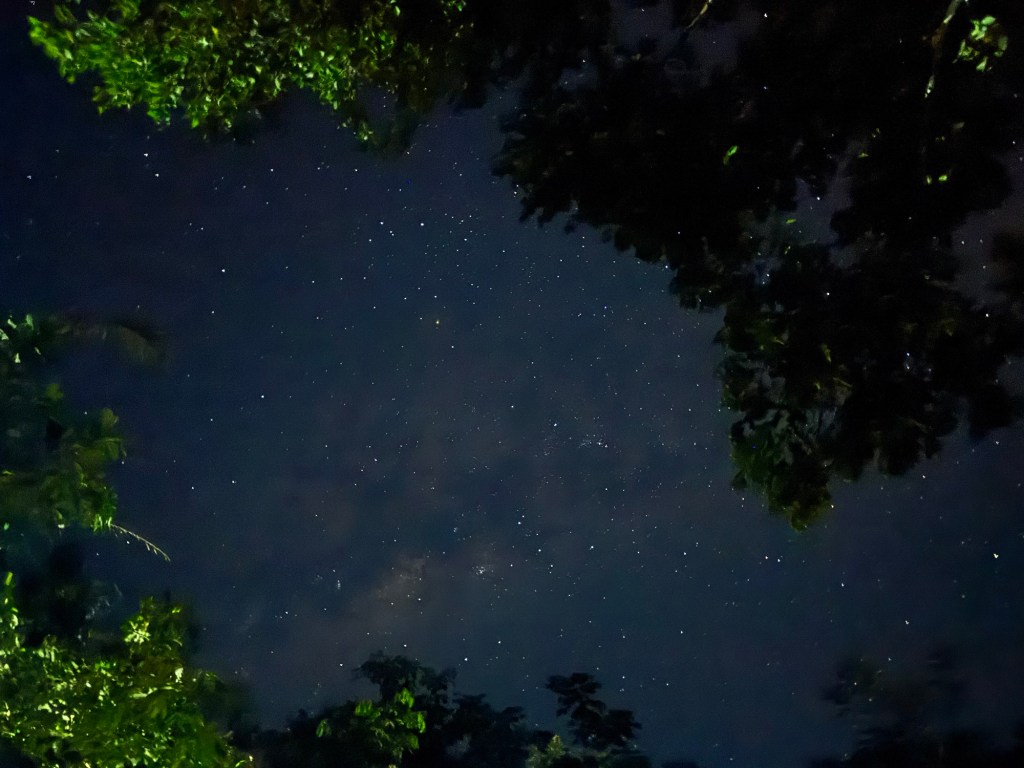
The night walk was the hardest part for me. I strongly dislike outdoor night activities, and searching for tarantulas and reptiles in the dark was not something I was mentally prepared for. However, we did spot some butterflies though, which I will take as a win.
The Environmental Stressors: What You Actually See
Being a visitor at an ecotourism lodge does not mean you are insulated from what is actually going on in the region. You see things. After a storm, the river was filled with trash. And closer to Puerto Maldonado, the amount of plastic and debris along the riverbanks got worse the closer we got to the city. At one point there was what I can only describe as a small mountain of trash piled up on the bank. It was unsettling. The Amazon gets framed as this pristine wilderness, and in many ways it is, but plastic pollution does not stop at the boat entrance.
There is also the question of what you do not see but know is there. Over 17% of the Amazon Basin has been deforested and 38% of what remains has been degraded by logging, agriculture, and development. Standing in the middle of a healthy forest, it is easy to forget how much pressure surrounds it.
Ecotourism and Conservation: Complementary or in Tension?
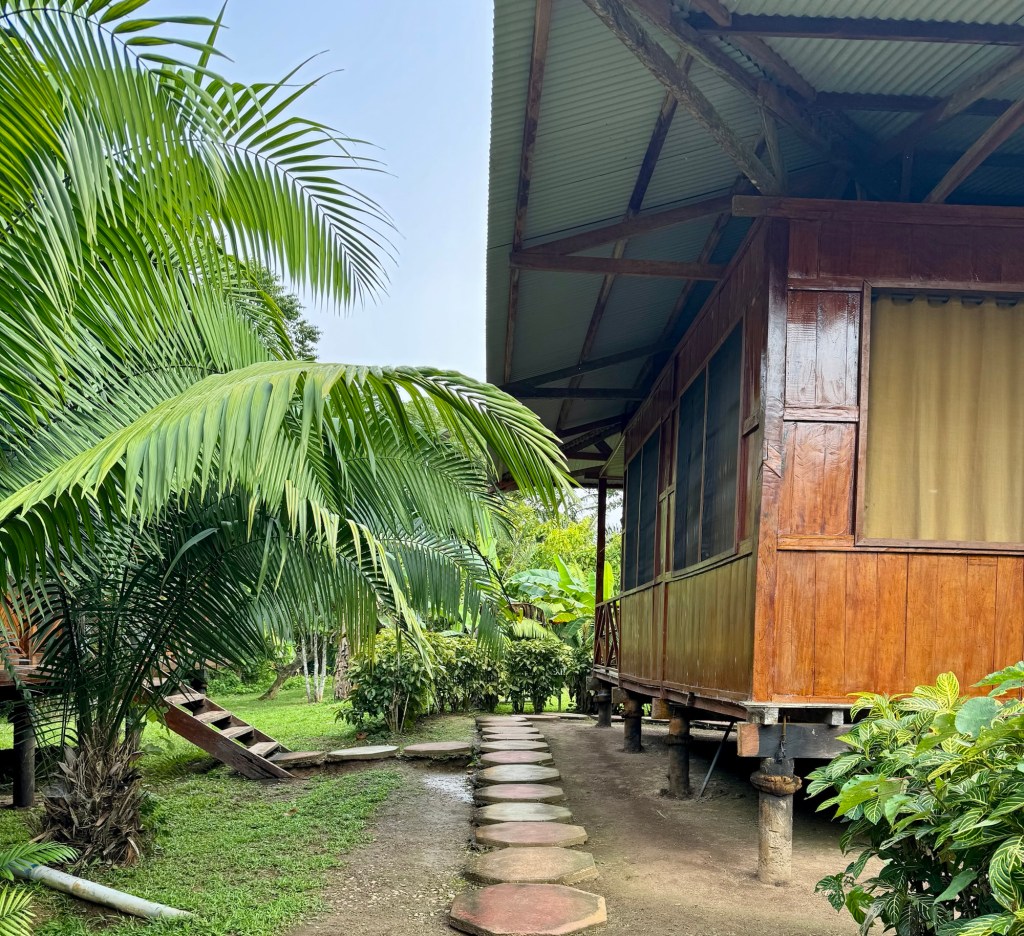
This is the question I kept coming back to. The lodge itself made some genuine efforts. They used motion-sensor lights to conserve energy, and there was only one light in the main lodge area. No AC, no hot water. It was only two nights and we adapted, but it was a real reminder that sustainability sometimes just means using less.
The bigger picture is more complicated. Ecotourism creates a financial argument for keeping forests intact. Research out of the Tambopata region of Amazonian Peru has found that ecotourism-controlled land tends to outperform alternatives like logging and agriculture in economic value, which means intact forest can actually make more financial sense than cleared land (Kirkby et al., PLOS ONE). That is a meaningful data point. When the forest is worth more standing than cleared, people have a reason to protect it.
But the model only works if it stays small and controlled. More tourists means more boats, more trails, more waste. The trash I saw in the river after the storm was a reminder that even well-intentioned tourism has a footprint. The tension is real.
The Legal Framework: The Convention on Biological Diversity
One of the most important international agreements covering what we saw in the Amazon is the Convention on Biological Diversity, or CBD. Adopted in 1992 at the Rio Earth Summit, the CBD addresses biodiversity at the genetic, species, and ecosystem level and has three core objectives: conserving biological diversity, promoting sustainable use of its components, and ensuring fair and equitable sharing of benefits from genetic resources (Convention on Biological Diversity, 1992).
All Amazon nations, including Peru, ratified the CBD and incorporated its provisions into their national legal frameworks (Mongabay, 2025). On paper, that means Peru has obligations to protect ecosystems like the ones I was standing in. Those obligations include developing national biodiversity conservation plans, monitoring components of biodiversity, establishing protected areas, and conducting environmental impact assessments for projects likely to cause significant adverse effects (CBD Article 6-8, 14).
Seeing the trash piled along the riverbank made me think hard about what those obligations actually look like in practice. The CBD sets the standard. Enforcement is another story entirely. A law requiring environmental impact assessments does not automatically stop a garbage pile from forming on a riverbank in Madre de Dios. The gap between the framework and the reality on the ground is something you only really understand when you have seen both.
Corporate Responsibility Near Sensitive Ecosystems
Companies operating in or near environments like the Amazon carry a different level of responsibility than companies in other contexts. The stakes are higher because the damage is often irreversible. A degraded forest does not just bounce back.
At minimum, corporations should be required to conduct genuine environmental impact assessments and actually act on what they find. Beyond compliance, there is a stronger argument that businesses in biodiversity-rich regions should be actively contributing to conservation, whether through funding, land preservation, or responsible waste management. The trash I saw building up near the city suggests that waste infrastructure and corporate accountability are serious gaps in the region.
The ecotourism lodge model is an example of trying to build conservation into the business itself. But even that model requires constant scrutiny. Growth, even sustainable-branded growth, can tip into harm.
Final Thoughts
Three days in the Amazon was not enough and somehow also exactly right. It was uncomfortable in ways I did not expect and beautiful in ways I also did not expect. The boat rides were the highlight. The trash in the river was the gut punch. Both things are true, and that tension is kind of the whole point of a trip like this.

Leave a Reply