Two days. Four stops. A lot of feelings I am still processing.
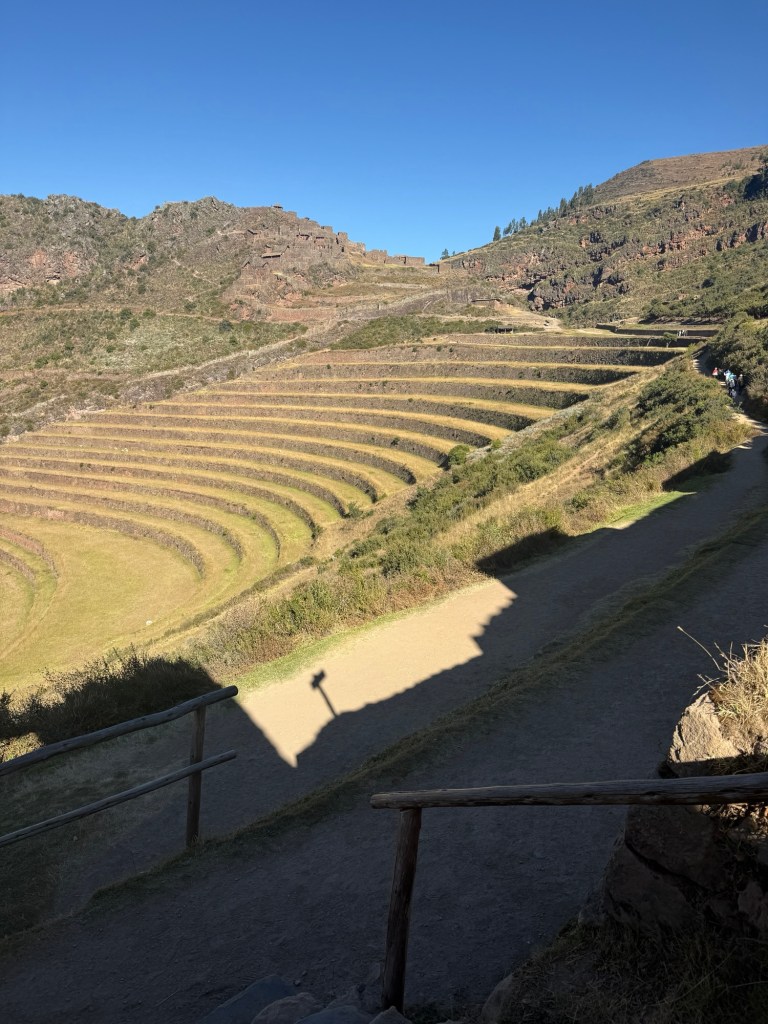
We started in the Sacred Valley at the Pisac market and ruins, had a Pachamanca lunch at El Albergue, visited Awamaki, and then stood at Machu Picchu. Each stop built on the last in a way I did not expect, and by the end of day two I felt like I had lived an entire semester of class in 48 hours. Here is my best attempt to make sense of it all.
Awamaki: A Different Kind of Organization
Our visit to Awamaki was one of the most meaningful stops of this entire trip. Awamaki partners with roughly 180 women across 9 cooperatives, investing in skills, leadership, and fair trade market access. But what I want to talk about is what it actually felt like to be there.
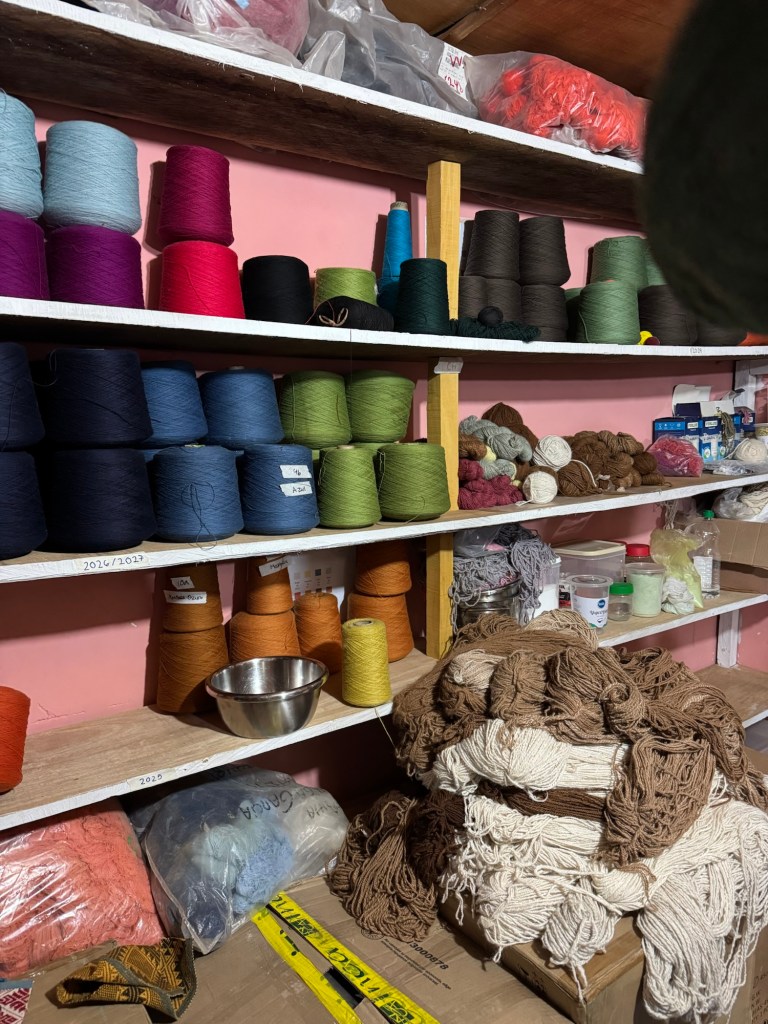
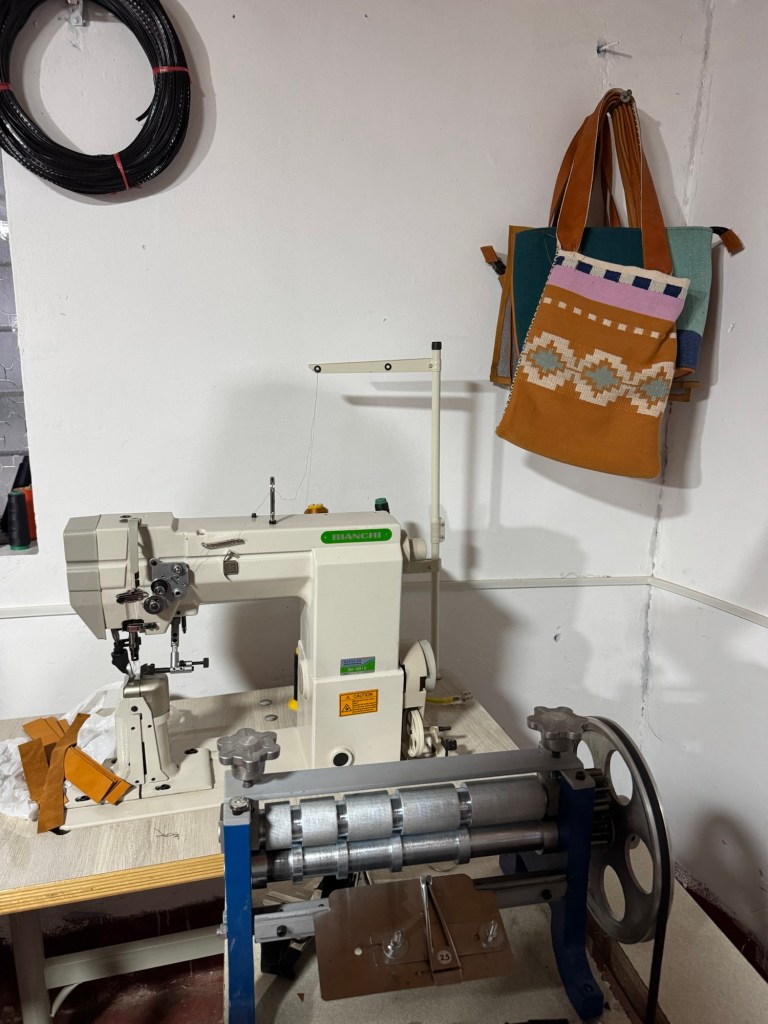
We visited their office and workshops and got to see the textile work up close. The volunteer house is steps away from the workspace, which says something about how integrated the team is in the community. We learned that the focus is primarily on women because most men in the region work as porters on the Inca Trail. They have been building these community relationships since 2009.
Something that stuck with me was the looming cards. Since many of the artists and partners did not have access to education for reading and writing, the cards give them visual guidance on colors and patterns. That detail mattered to me. It is not a workaround or a limitation. It is a thoughtful adaptation that keeps the work accessible without requiring anyone to change who they are.
The textiles themselves are entirely handmade, not machine-made. Each piece takes more than three to six months to complete and carries a story that connects the weaver to past generations. Alpaca fiber is central to the work because alpacas are native to the higher Andean communities where the partners live, far from large cities. But there is a real logistical challenge: some weavers walk two to two and a half hours just to get to the market, so trips have to be planned carefully. And because they sell to international markets, there are quality standards to meet. To meet those standards and ensure fair pay, Awamaki uses time studies to determine how long each piece takes, and works closely with artisan partners to listen to their feedback on payment given the difficulty of each piece. That is a very different process than how most corporations set prices.
Awamaki is a member of the Fair Trade Federation, which ensures that all trade is conducted fairly. They also compensate partners for meals and other necessities and review costs on an annual basis to make sure payments reflect reality. One of the artists even received a grant for hand-threaded yarn, which is the kind of support you simply do not see in conventional corporate structures.
Speaking of which. When I compare Awamaki to the companies we studied this semester, the difference is obvious. Most corporations are structured around shareholder value and profit margins. Awamaki is structured around the partners. The community helped name the organization. The weavers are part of the design process. Pricing is negotiated, not imposed. Their sustainable tourism program also allows artisan women to earn income by sharing their cultural knowledge of weaving instead of having to leave their communities to work in hotels or cities. That is a model built around people staying rooted, not extracting labor and moving on.
One real concern that came up: climate change is directly affecting the alpaca supply. Alpacas are raised in mild, higher-altitude climates, but as those climates shift and glaciers melt, the grass they depend on is being impacted. The shearing process happens during the rainy season specifically because the animals need enough fleece to survive the winter. This is not an abstract environmental issue. It is hitting the artists and partners directly. Awamaki even has a sustainable designer on staff whose job is to find ways to repurpose textiles so nothing goes to waste. That is circularity in practice, and a good transition into the next section.
What Is Circularity?
Circularity refers to a closed-loop system where resources are kept in use for as long as possible and waste is designed out of the process. Instead of the traditional take-make-dispose model, circular systems reuse, repair, repurpose, and compost. I actually saw this play out in multiple ways during our visits.
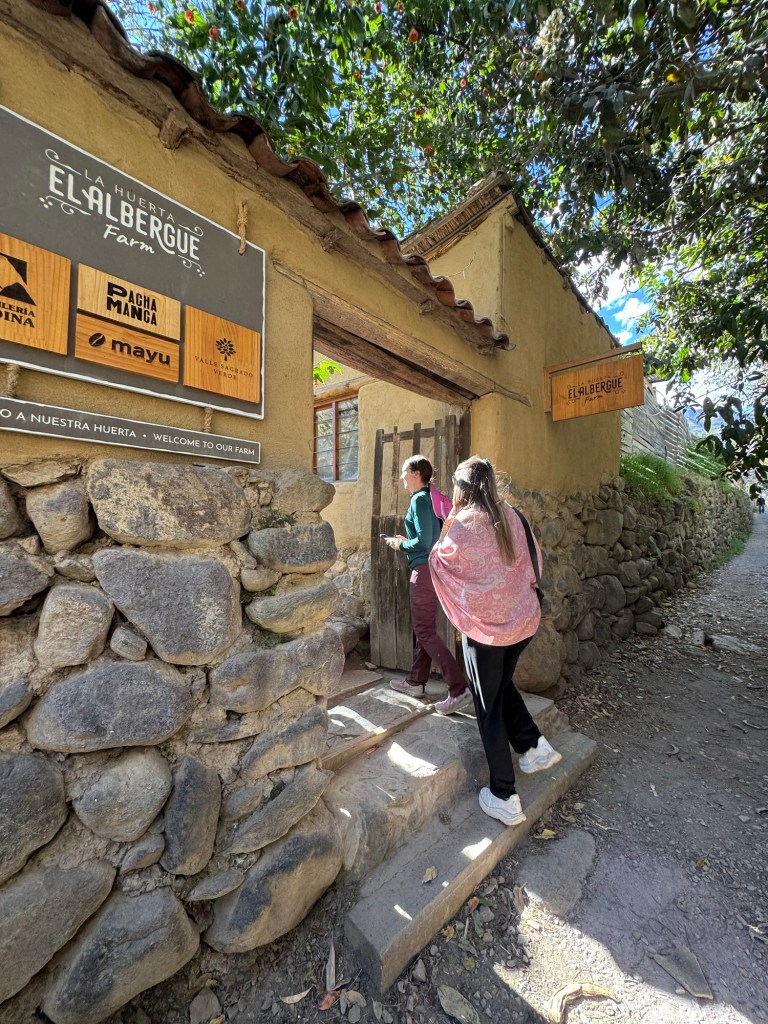
At El Albergue, the commitment to circularity was visible everywhere. They compost food scraps to feed garden bags, grind their own coffee beans, and make their own rum from sugar. They have a strong policy against plastic and do not even sell Coca-Cola. Instead of buying plastic bags, guests are given reusable ones and bottles to take with them. They do not sell beef because of the water use required to raise cattle. Signs are made from wood. The building itself is over 100 years old, originally built for railway workers, and has been maintained without oil-based products so the original paint stays intact. Even the trees inside the kitchen area are preserved rather than removed. Fernando, who spoke with us, made it clear that every detail is intentional. The whole place is designed to disconnect you from your normal life, and honestly, it works.
At Awamaki, circularity shows up through the sustainable designer who repurposes leftover or imperfect textiles into new products rather than discarding them. Nothing goes to waste.
Pachamanca and a Different Way of Thinking About the Land
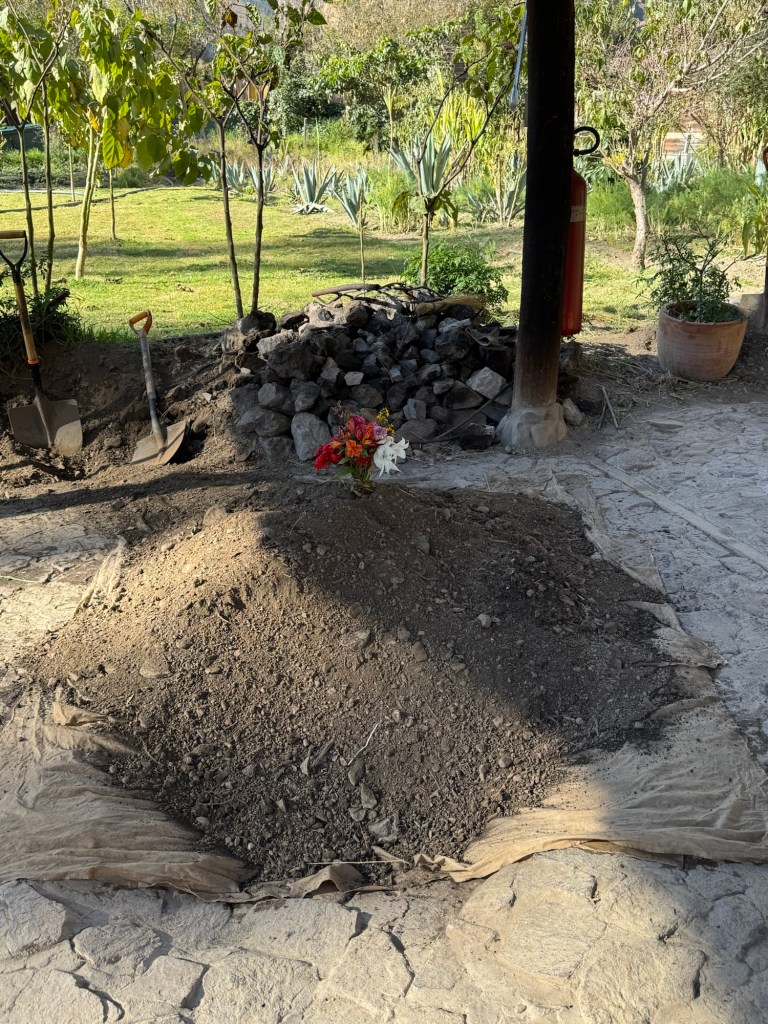
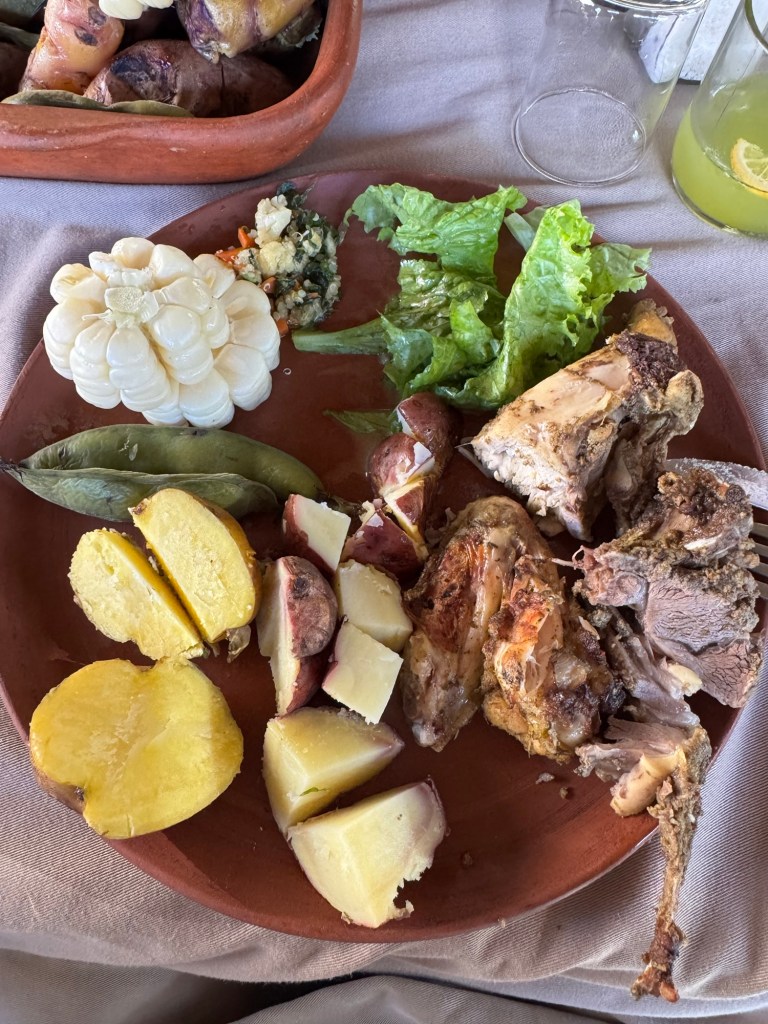
The Pachamanca was one of the coolest and best meals I have ever had. The word itself comes from Quechua: Pacha means earth and manca means pot. It is literally an earth pot. Food is slow-cooked underground using heated stones, and it is a practice with deep roots in Andean cosmology. The idea is that the earth gives, so you give back. The meal is not just food. It is a relationship.
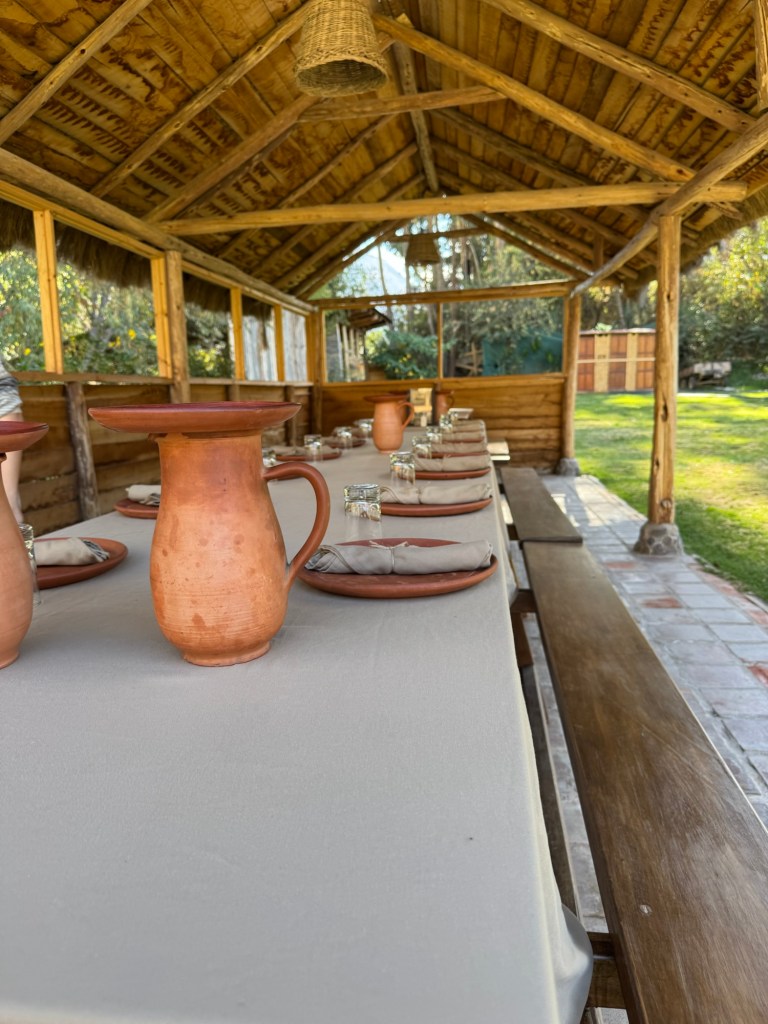
We all shared the meal family style, and honestly that was my favorite part of the whole experience. We went around the table sharing thoughts, reflections, or whatever was on our minds, surrounded by a picture perfect view and whole foods that were sourced right there. It is the kind of moment that does not translate well into words but I know I will look back on it and smile for a long time. Thank you to my professor for giving us that memory.
I could not imagine doing this trip with another group. At this point I think we really are a family. We have done everything together from easy to hard, and having people who show up for each other whether that is at the top of a canopy walk or during a night walk searching for tarantulas means more than I can say. A group that supports my fear of heights and spiders is not something I take for granted.
That framing is so different from how I typically think about environmental stewardship. In a business context, sustainability usually means reducing harm or hitting a carbon target. But Pachamanca reflects a worldview where humans are not separate from the land managing it from a distance. We are part of it. The earth is not a resource to extract from. It is something to be in relationship with.
I also used a compost toilet for the first time during this trip. That was a moment. But it fits right into this same philosophy. Nothing leaves the cycle. Everything returns to the earth.
Machu Picchu: Beyond the Photos
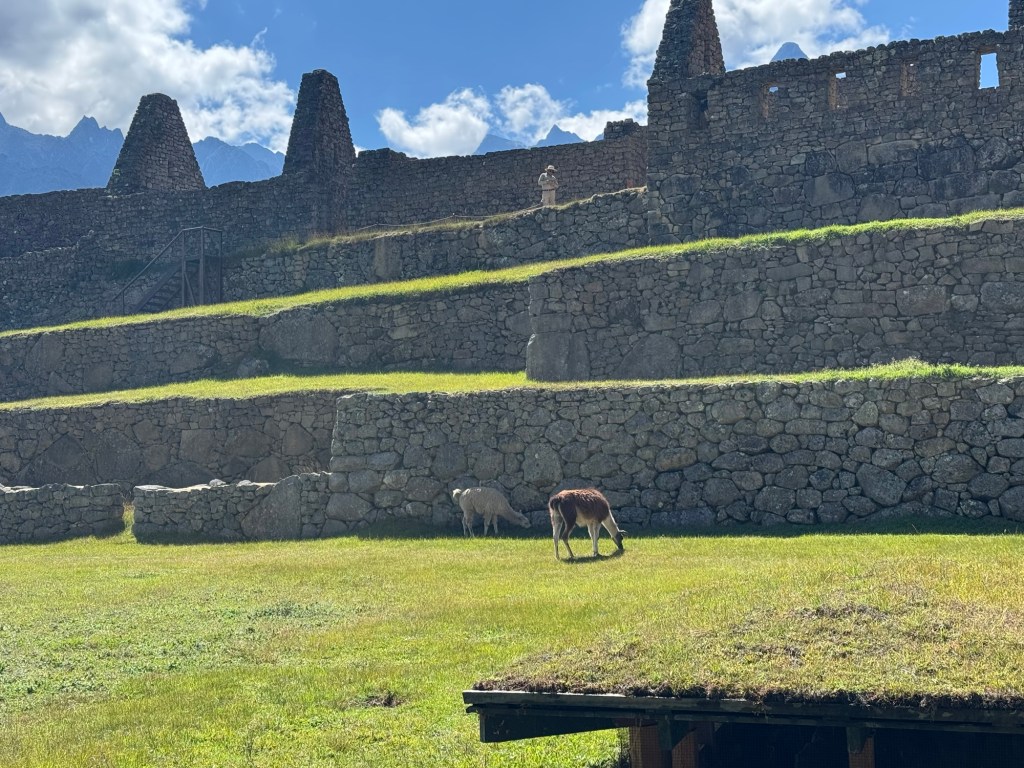
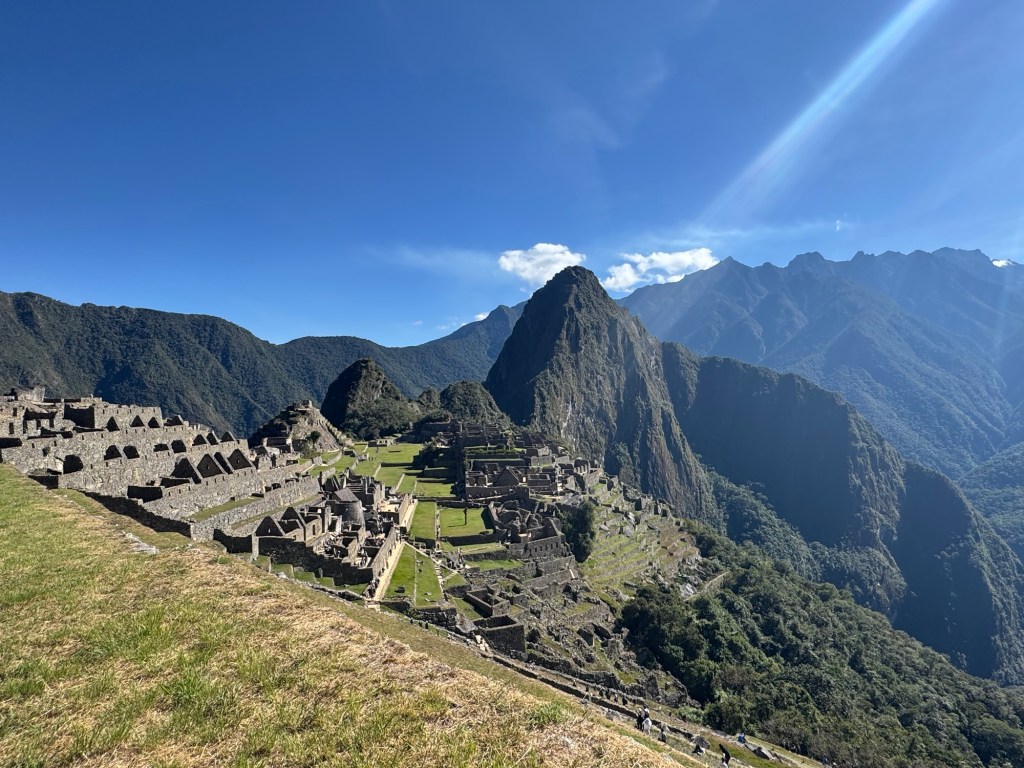
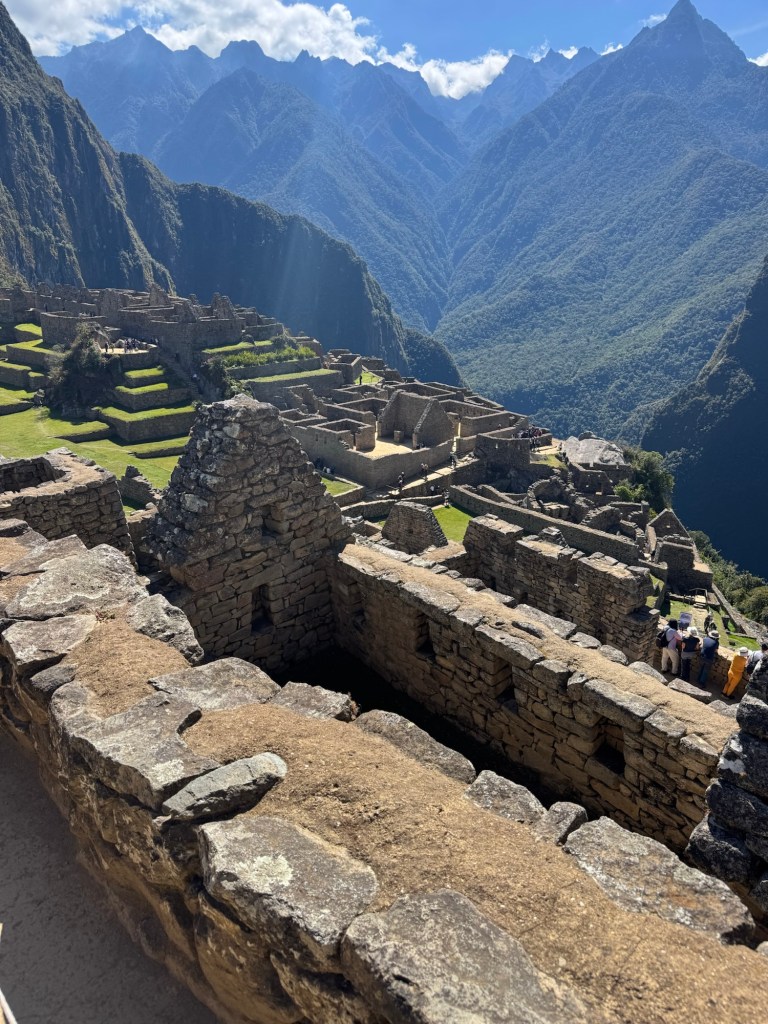
Standing at Machu Picchu is genuinely hard to describe. I have seen it in pictures my whole life and it still did not prepare me. But once the initial awe settled, I started thinking about the questions that are harder to sit with.
The Peruvian government has introduced visitor caps and timed entry circuits to manage the flow of tourists, and our guide mentioned the current daily limit is around 4,000 people. That is still a lot of foot traffic on ancient stonework and fragile terrain. The tension between access and preservation is real, and it does not have an easy answer.
The revenue piece is its own conversation. From what we were told, approximately $84 million goes to the state annually, with roughly 70% going to the national government. That raises an obvious question: are the communities closest to Machu Picchu seeing a fair share of that benefit? We had lunch in Aguas Calientes at a restaurant called Mapacho. They had plastic straws. That small detail stuck with me. Here is a town that exists almost entirely because of tourism to a world heritage site, and basic sustainability practices are still inconsistent. That gap between the policy at the top and the reality on the ground is worth paying attention to.
There is also a proposed cable car project that would carry visitors up the mountain to a lookout point for Machu Picchu. On the surface it sounds like a convenience. But it raises serious questions about what we are willing to do to a sacred and protected site in the name of making it more accessible. At what point does expanding access become damaging the very thing people came to see? Governments and corporations both have an obligation to protect common resources like this, not just monetize them. The cable car conversation feels like a test of whether that obligation is taken seriously.
Sites like Machu Picchu remind me that awe and accountability can exist at the same time. Conservation is not just about the stones. It is about the people, the surrounding ecosystem, and the communities that carry this culture forward every day.
These two days gave me a lot to think about. Awamaki showed me what it looks like when an organization actually builds its structure around its community rather than the other way around. El Albergue showed me that sustainability can be a way of life, not just a policy. Pachamanca reminded me that there are entire worldviews built around living with the land rather than on top of it. And Machu Picchu reminded me that awe and accountability can exist at the same time.

Leave a comment