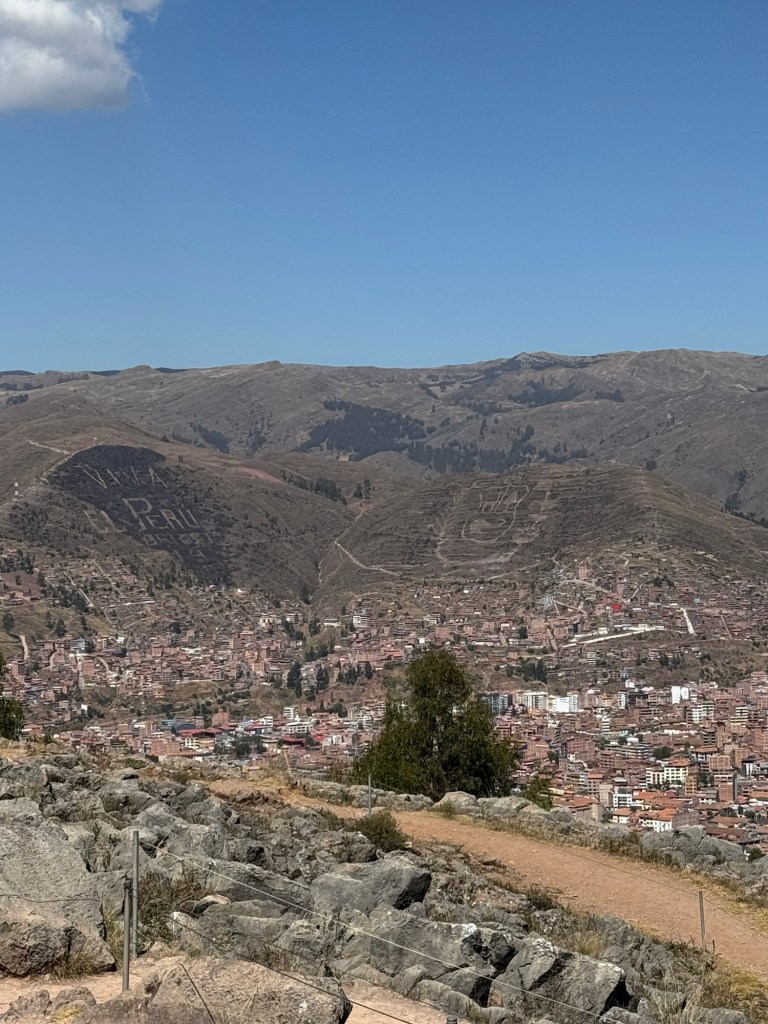
I have been trying to figure out how to write this post since we left Sacsayhuaman. There is something about standing on a hill that high, looking out over a city that has been conquered, rebuilt, and commodified, and still feels undeniably alive, that makes you want to say something real. So I am going to try.
What the Stones Say
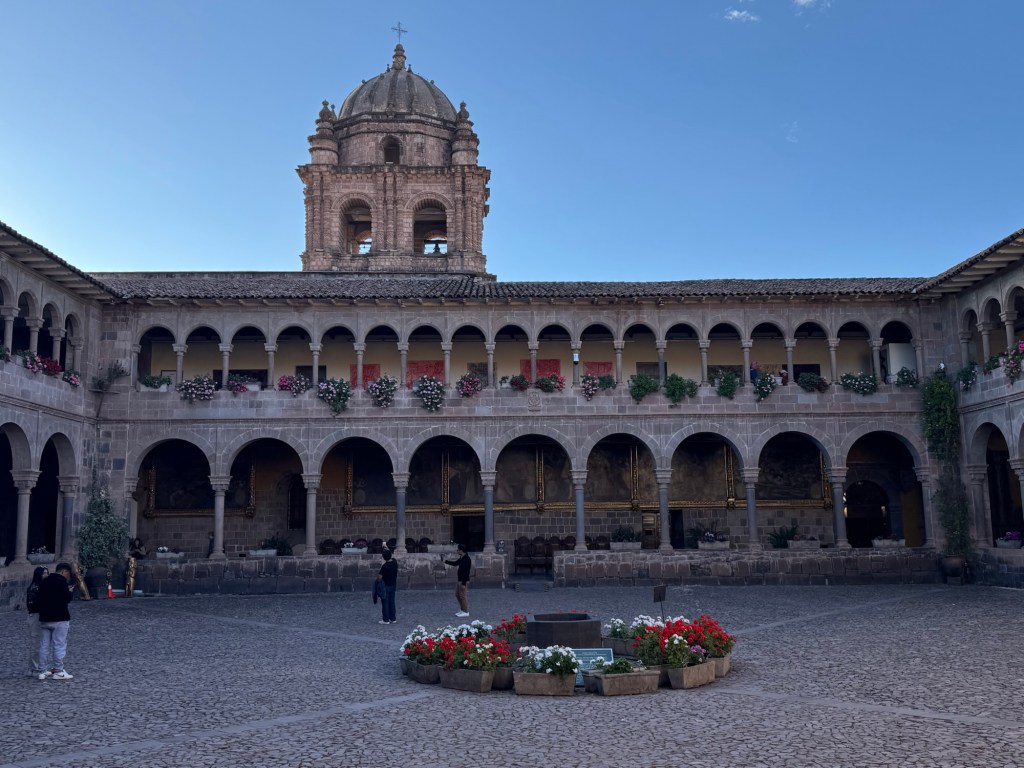
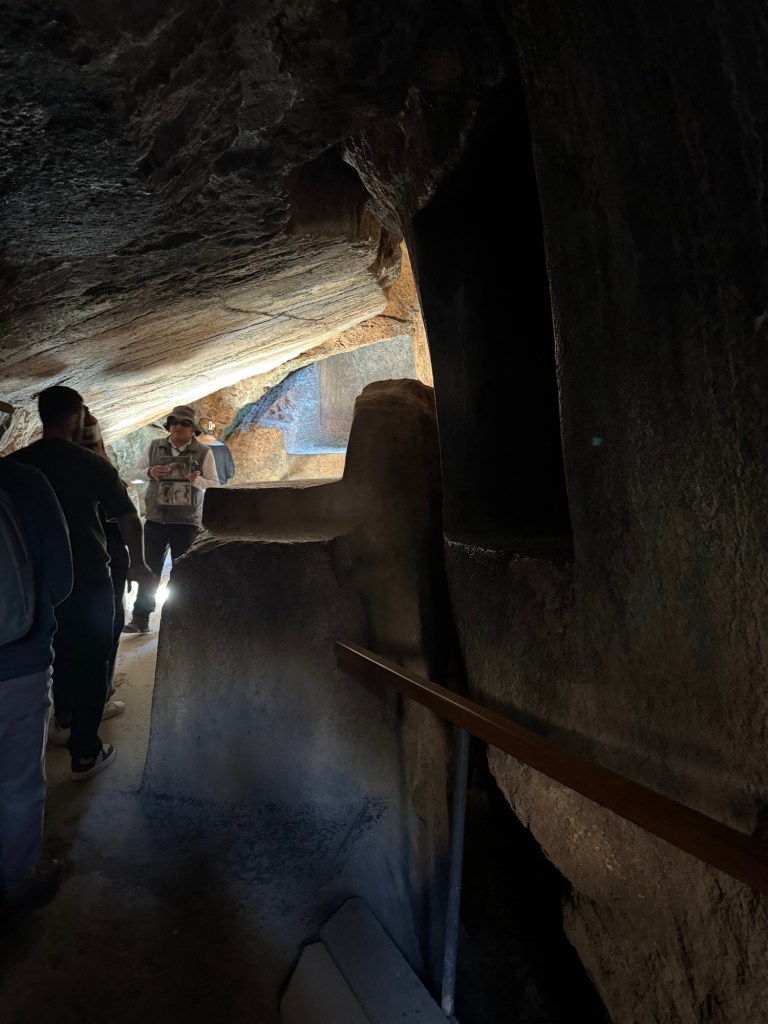
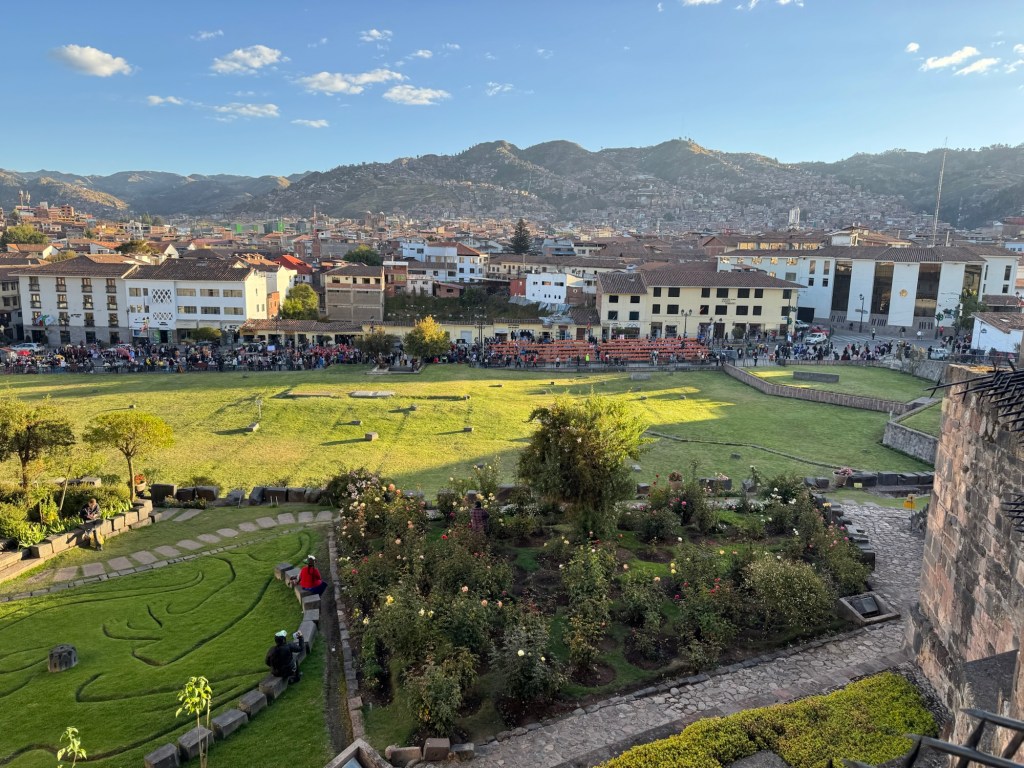
The thing about Cusco that gets me is that you can see the whole history of power in a single wall. At Koricancha, the Temple of the Sun, only about 22% of the original Incan structure still stands. The rest was dismantled by the Spanish and used to build a colonial cathedral directly on top of it. That is not a metaphor. That is literally what happened.
The Incan stonework that remains is almost unsettling in how precise it is. Walls cut without mortar, blocks that fit together so perfectly they have survived centuries of earthquakes. And layered right on top of it: baroque arches, Spanish tile, Catholic iconography. Two worldviews stacked on top of each other, and one of them was not given a choice.
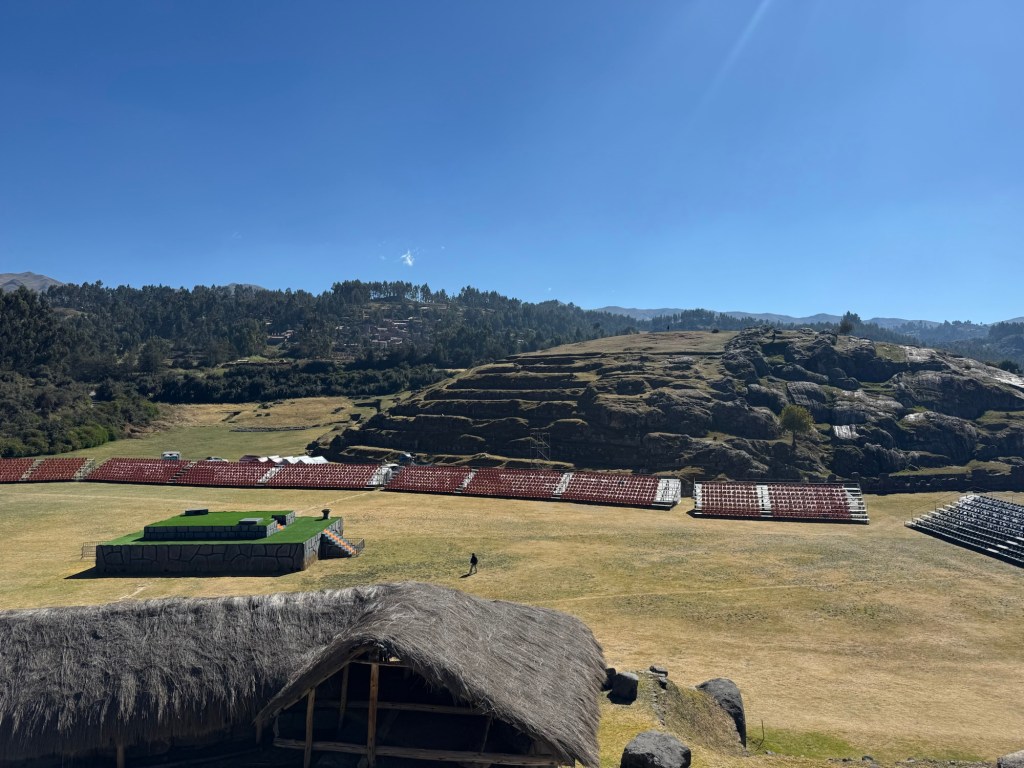
Sacsayhuaman told the same story from a different angle. The stones there are massive, some weighing up to a ton, moved and placed with a precision that still baffles people today. Our guide mentioned it takes about 15 people to pull one of those stones. The Incas built this to last. And the Spanish saw it as a quarry.
What does that communicate about power? Everything. The architecture of conquest is not subtle. You build your church where their temple was. You use their stones to do it. You rename their city. And then, a few hundred years later, you put it all on a UNESCO World Heritage list and charge admission.
Tourism as the New Layer
That brings me to the uncomfortable part. Because Cusco is not just a colonial city anymore. It is a tourism economy. The plazas are full of souvenir shops and restaurants with QR code menus. Inti Raymi, one of the most sacred Incan festivals in the world, now draws tens of thousands of visitors and has ticketed sections.
I am not saying that is entirely wrong. But it is worth sitting with. Every time a new economic force moves through Cusco, it adds a layer. And the question the prompt is really asking is: who benefits from the newest layer?
Legally, businesses operating in a UNESCO World Heritage site have some obligations. They are not supposed to contribute to the degradation of the site. But the regulations around what counts as degradation are vague, and enforcement is inconsistent. The ethical obligations are harder to codify. If your business profits from a place, you owe that place something. What you owe, and to whom, is where it gets complicated.
The Centro de Textiles Tradicionales and Manos de la Comunidad
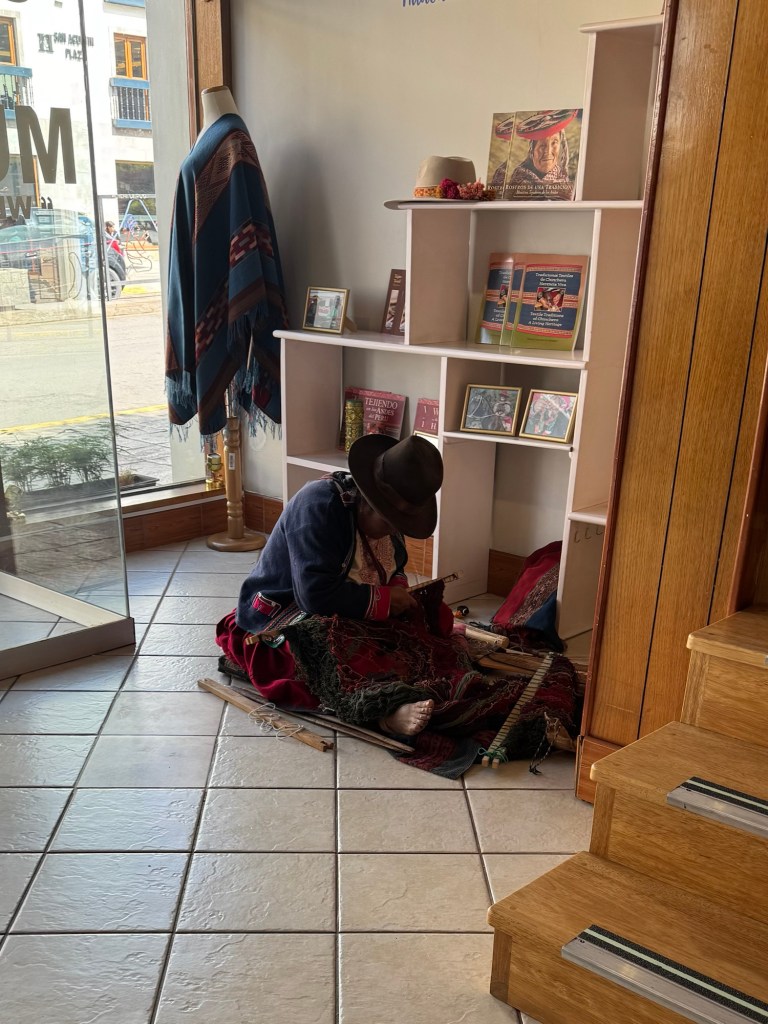
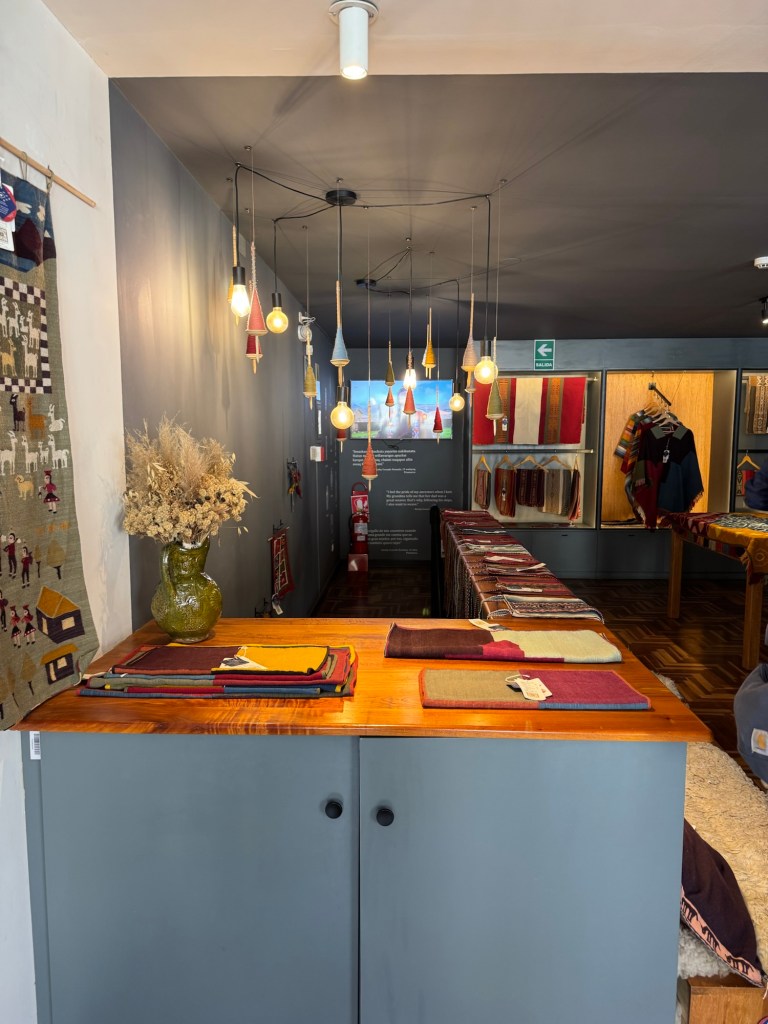
Linda’s story stuck with me. She started weaving in the 1970s, saw a need, and built something from it. The Centro de Textiles Tradicionales was established in 1986, started with a handful of friends and partners, rooted in community before anything else. In 2004 they finally got their first physical center, on her parents’ land. That timeline alone says something about what slow, patient, community-first work actually looks like.
What she is preserving is not just technique. It is identity. A single placemat takes four to five days to make. The children’s group that started in 1994 brings kids in on Saturdays and Sundays to learn patterns and methods that have been passed down for generations. That is not a product. That is a living archive.
And she is honest about the hard parts. Wholesale is a challenge because of price consistency and quality control. The government is pushing mechanized looms for mass production. The 18% sales tax applies to them in full because traditional textiles do not qualify for the exemptions given to basic food items. She said something that I keep coming back to: “The bigger you grow the more problems you have.” That is not cynicism. That is the reality of trying to scale something that is built on slowness.
Manos de la Comunidad was in that same spirit. Artisan work grounded in community benefit, not corporate extraction.
Alpaca Expeditions
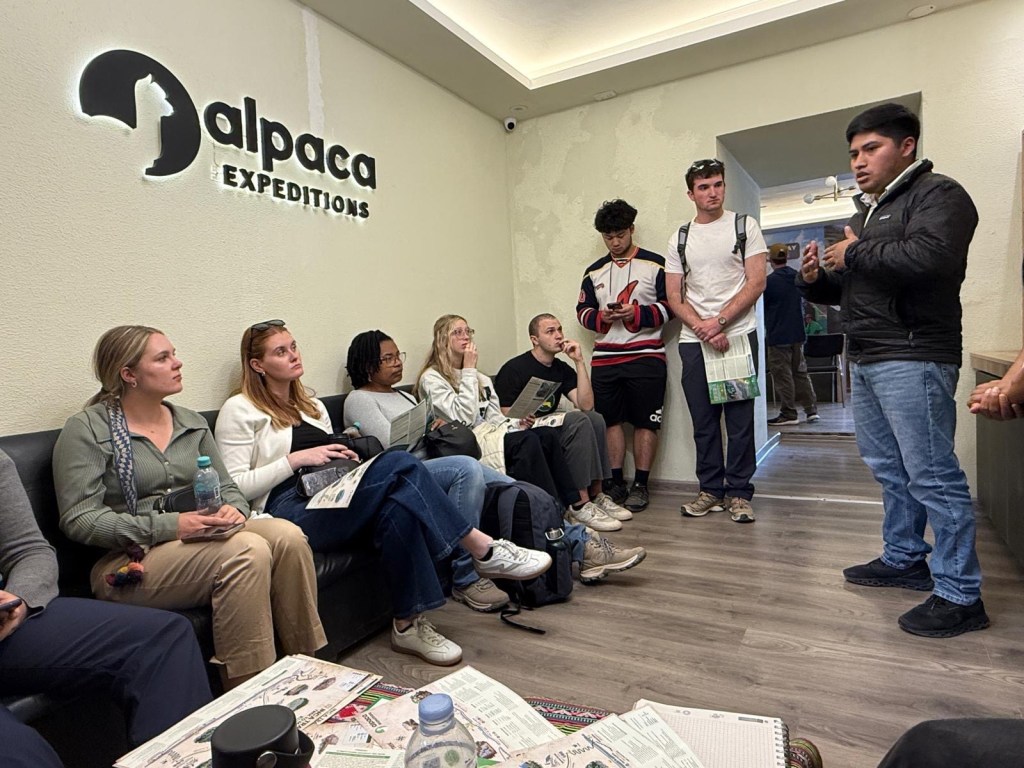
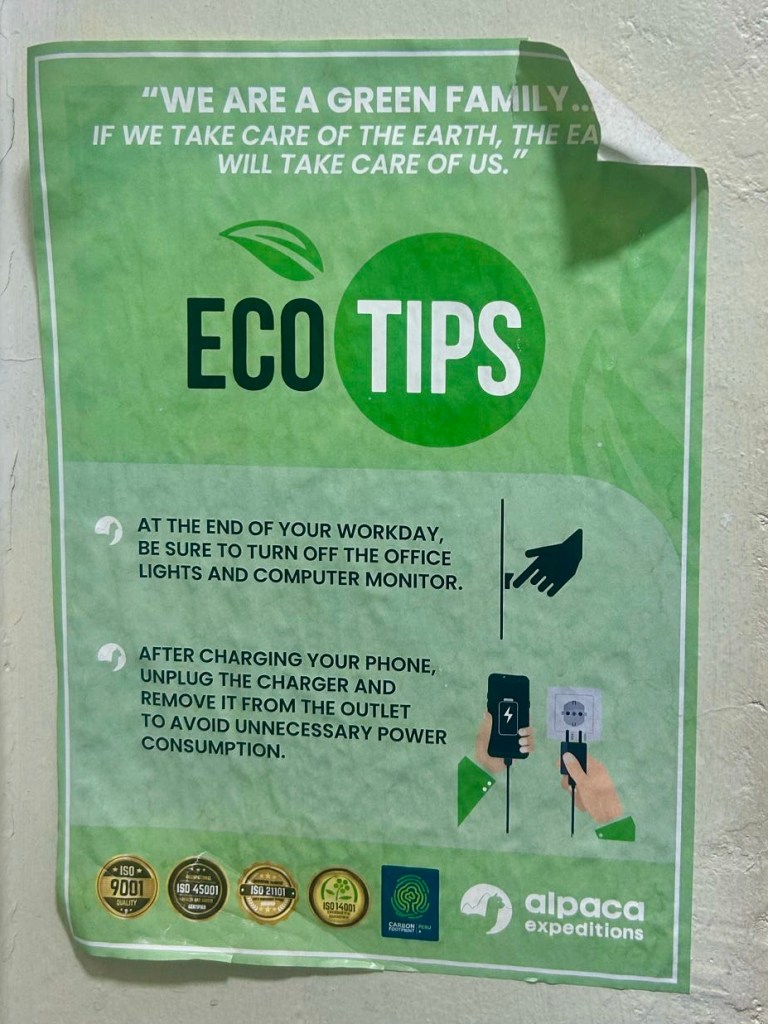
Angel and Nancy work for a company that asks the right kinds of questions. Alpaca Expeditions started in 2012 as an Inca Trail operator and has grown to employ more than 3,000 people, including porters, cooks, and guides. They take a “Green Machine” approach: groups are small, around 16 people, porters carry no more than 25 kilos, green bags go out with every group to pack out trash, and food is sourced locally.
They do not operate in February because the rainfall is too heavy and the environmental impact too high. They close down voluntarily. That is a small thing, but it is a real thing.
What makes Alpaca Expeditions interesting to compare to a company like DP World is the scale and the visibility of impact. DP World is working toward a 42% carbon reduction by 2030 with SBTi verification. That is meaningful. But the accountability structure is different. At Alpaca Expeditions, Angel has personally hiked the Inca Trail more than 30 times. The impact is not being managed from a boardroom. It is being lived.
ChocoMuseo and the Supply Chain Question
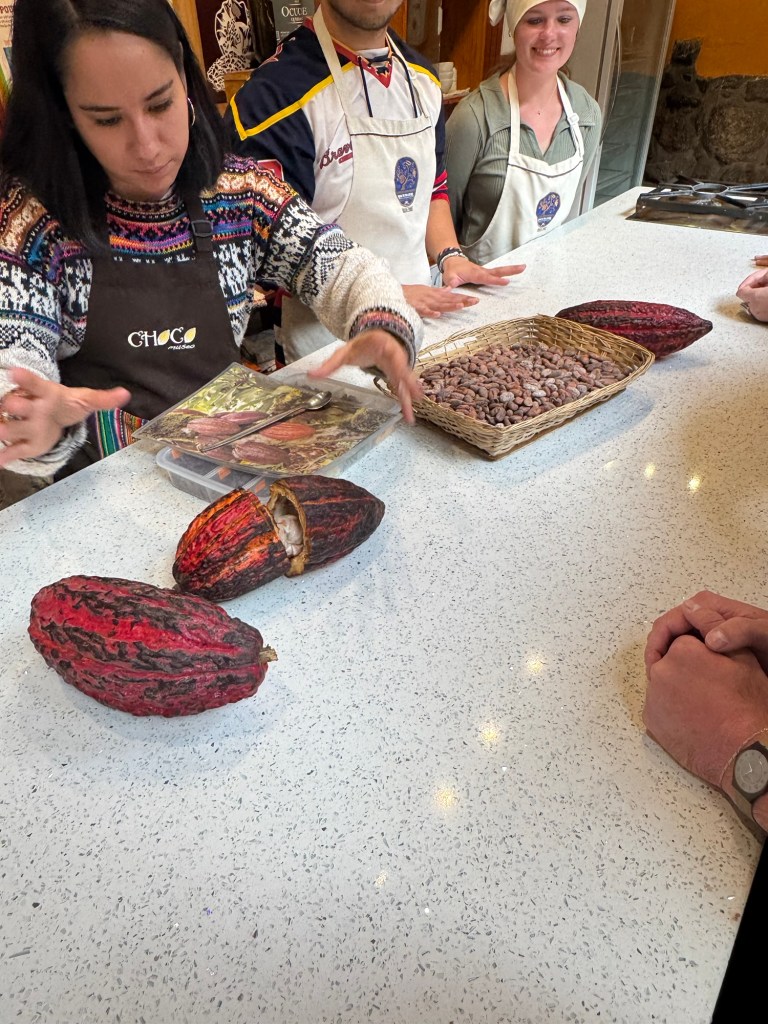
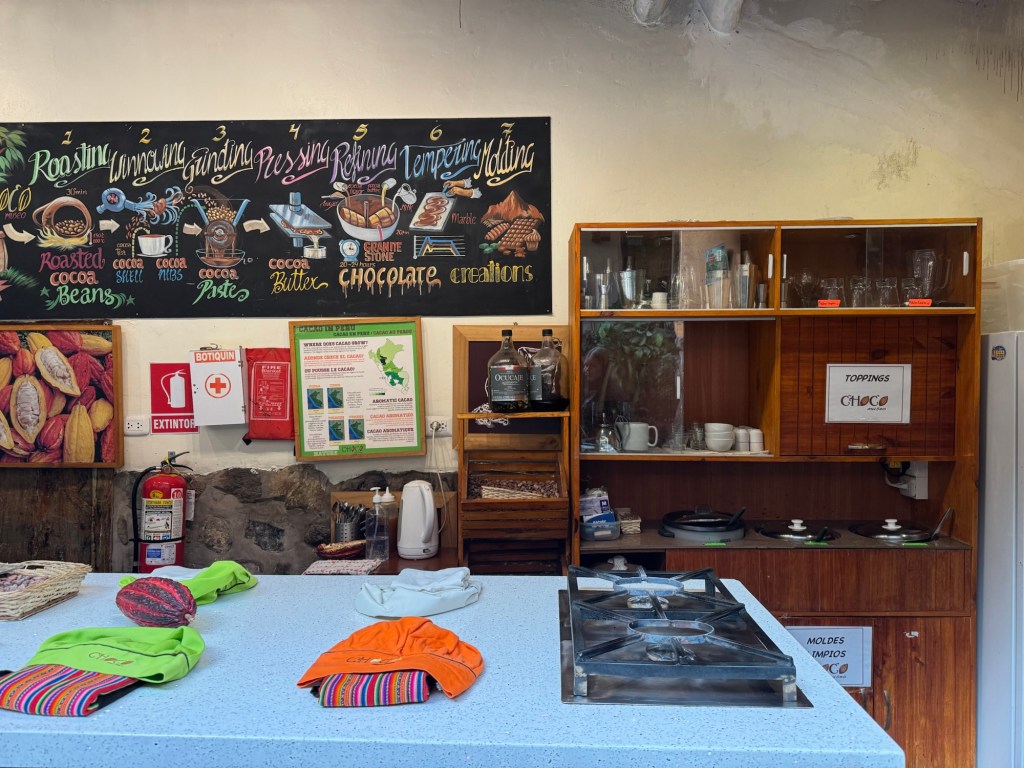
The bean-to-bar workshop at ChocoMuseo was genuinely one of the most fun things we did the entire trip, and also one of the most educational. Our guide walked us through the entire process from start to finish, starting with how cacao trees are grown, all the way through fermentation, drying, roasting, and tempering until you have a finished bar of chocolate. We even learned the specific vocabulary for each stage of the process and cheered to each one, which sounds silly but actually made it stick.
We made tea from the cacao shells, which I did not know was a thing, and hot chocolate from the beans themselves. Then we got to make our own chocolate molds and add whatever extras we wanted into them. There was even a friendly competition involved. It was the kind of hands-on experience that makes you realize how many steps, decisions, and people are involved before chocolate ever reaches a shelf.
And that is really the point. The distance between a cacao tree and a finished product is where a lot of ethical failures live. Who grows it. Who processes it. What they get paid. Whether the ingredients are sourced locally or from somewhere far removed from the community. Vertical integration sounds efficient. But when the people at the base of that supply chain are in communities like the ones we visited throughout this trip, efficiency and equity are not always the same thing.
Zooming Out
We visited a recycling operation, a major port, a nonprofit sustainability org, an indigenous artisan cooperative, a farm dinner built around Andean agricultural tradition, a textile preservation center, and an adventure tourism company. We did it across the Amazon, the Sacred Valley, Lima, and Cusco. That is a lot to hold.
The theme I kept coming back to is the gap between aspiration and reality. DP World has a net zero target. KPA is keeping recyclables out of landfills but operating in conditions that reflect the fragility of Peru’s informal economy. Peru Sostenible frames sustainability beautifully across environmental, economic, and social dimensions. And then you look at the glaciers from Sacsayhuaman and our guide tells you they have melted 40% in the last 10 to 12 years, and you can no longer see the snow-capped peaks that used to be visible from the altar. The aspirations are real. The gap is also real.
What I noticed about the organizations that felt most authentic, Linda’s center, Awamaki, Alpaca Expeditions, was that they were not trying to solve everything. They were trying to do their specific thing well, with integrity, in relationship with the people around them. That is a smaller claim than a corporate sustainability report, but it might be a more honest one.
The Kind of Leader I Want to Be
I came into this program as an accounting student interested in sustainability. I am leaving it as someone who has watched what it actually looks like when business and culture and power share the same space.
I want to be a leader who asks who benefits before asking what the margins are. I want to be someone who understands that legal compliance and ethical responsibility are not the same line. I want to remember Linda saying “the bigger you grow the more problems you have,” not as a reason to stay small, but as a reason to be careful about what you are building and why.
This program gave me frameworks. But more than that, it gave me images. The Incan stones underneath the Spanish cathedral. The porters on the trail carrying no more than 25 kilos. The children learning to weave on a Saturday morning. Those are the things I will carry into a boardroom someday. And I think they will matter.

Leave a Reply